

Thermodynamics vs. The Intelligence Age: The Realities of Digital Agriculture

We are trying to figure out how to feed a planet where a third of our food comes from small-scale farmers who are constantly hammered by unpredictable weather shifts and broken market networks.
For decades, agricultural improvement was a slow game of crossing plants and waiting out seasons. But a massive shift is happening because artificial intelligence actually works. It is changing our relationship with biology by figuring out the hidden rules of how things grow and fight off disease.
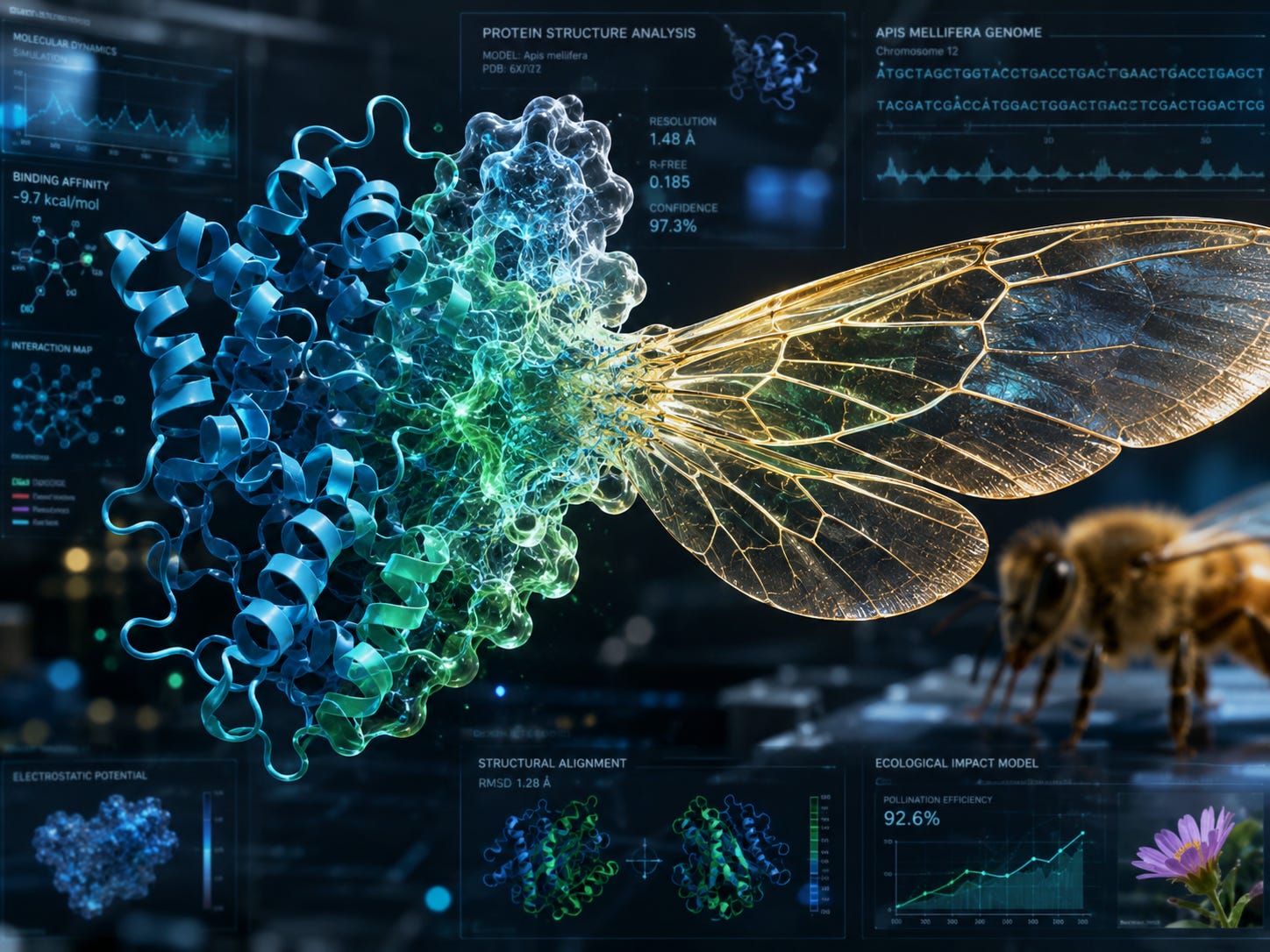
Look at what is happening at the molecular level. Researchers use structural biology models like AlphaFold. It won a Nobel Prize for predicting how proteins and genetic materials fold, to completely bypass old laboratory bottlenecks. At the University of Zurich, scientists combined these models with comparative genomics to track exactly how plants sense rapid environmental changes. They shaved years off the time it takes to breed crops that can survive a severe drought. The same technology helps save pollinators. Scientists mapped a vital bee immunity protein called Vitellogenin, giving breeders a clear blueprint to build healthier, disease-resistant honeybee colonies.
This is not just about big labs. The real value happens when you bring this intelligence down to the farm level, acting like an expert coach in a farmer’s pocket. We can see the blueprint for this in modern education tools. Platforms like Khanmigo and Duolingo Max use advanced language models to guide users through complex problems without simply handing over the answers. If a learner makes a mistake, the software asks them to explain their thinking or tries a different example until the concept clicks.
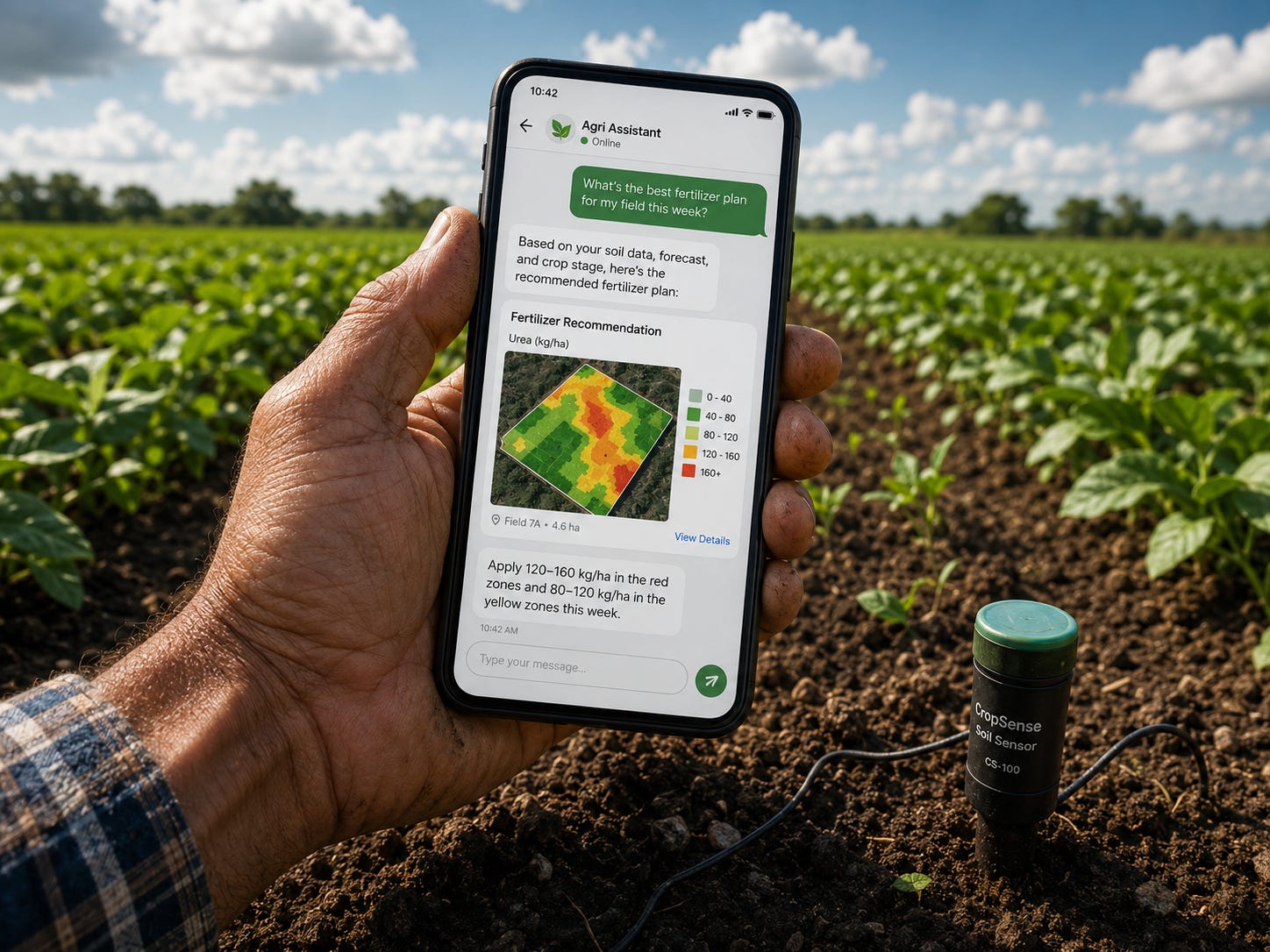
When you apply that exact same interactive logic to farming, the results are immediate. Instead of an expensive human consultant, an automated advisory system can ingest data from local soil sensors and satellite imagery. It talks to the farmer in their native dialect and explains the reasoning behind a fertilizer choice. It even adapts the plan to match the family’s real financial limits. It turns high-level agronomy into clear, conversational steps.
The economic ripple effects go even further. Small farmers are routinely locked out of traditional banking because they lack formal credit scores and represent too much financial risk. AI bypasses this institutional barrier by looking at non-traditional data. By analyzing historical crop yields via satellite data alongside regional mobile phone usage patterns, algorithms can measure risk with incredible accuracy. This unlocks micro-loans and weather-indexed insurance policies that keep a family from going under when a bad storm hits.
According to classic economic models, innovators only capture a tiny fraction of the wealth they create, while the remaining ninety-eight percent cascades out into the community. This kind of automated infrastructure could trigger exactly that kind of widespread material wealth.
But we have to be honest about the physical realities. Silicon Valley leaders love to talk about an impending Intelligence Age where computing power scales up smoothly until it automatically fixes the climate and unravels the mysteries of physics. Agriculture reminds us that the physical world does not run on digital speed. Plant cell division and crop gestation periods require an absolute, uncompressible amount of time. An algorithm can design an optimized seed in a fraction of a second, but you still have to put it in the ground and wait months to see if it survives a real-world summer.
There is also a massive energy bill. Running the infrastructure required to calculate millions of soil conditions and regional atmospheric variables simultaneously brings us face-to-face with the laws of thermodynamics. Landauer’s limit shows that erasing a single bit of digital information at a certain temperature costs a finite, unavoidable amount of physical energy:
E≥kBTln2
When that information turns into heat, it places a heavy physical burden on our electricity grids.
If we do not invest heavily in clean energy and open, public digital infrastructure, these computational tools will become highly concentrated monopolies held by massive agribusiness cartels.
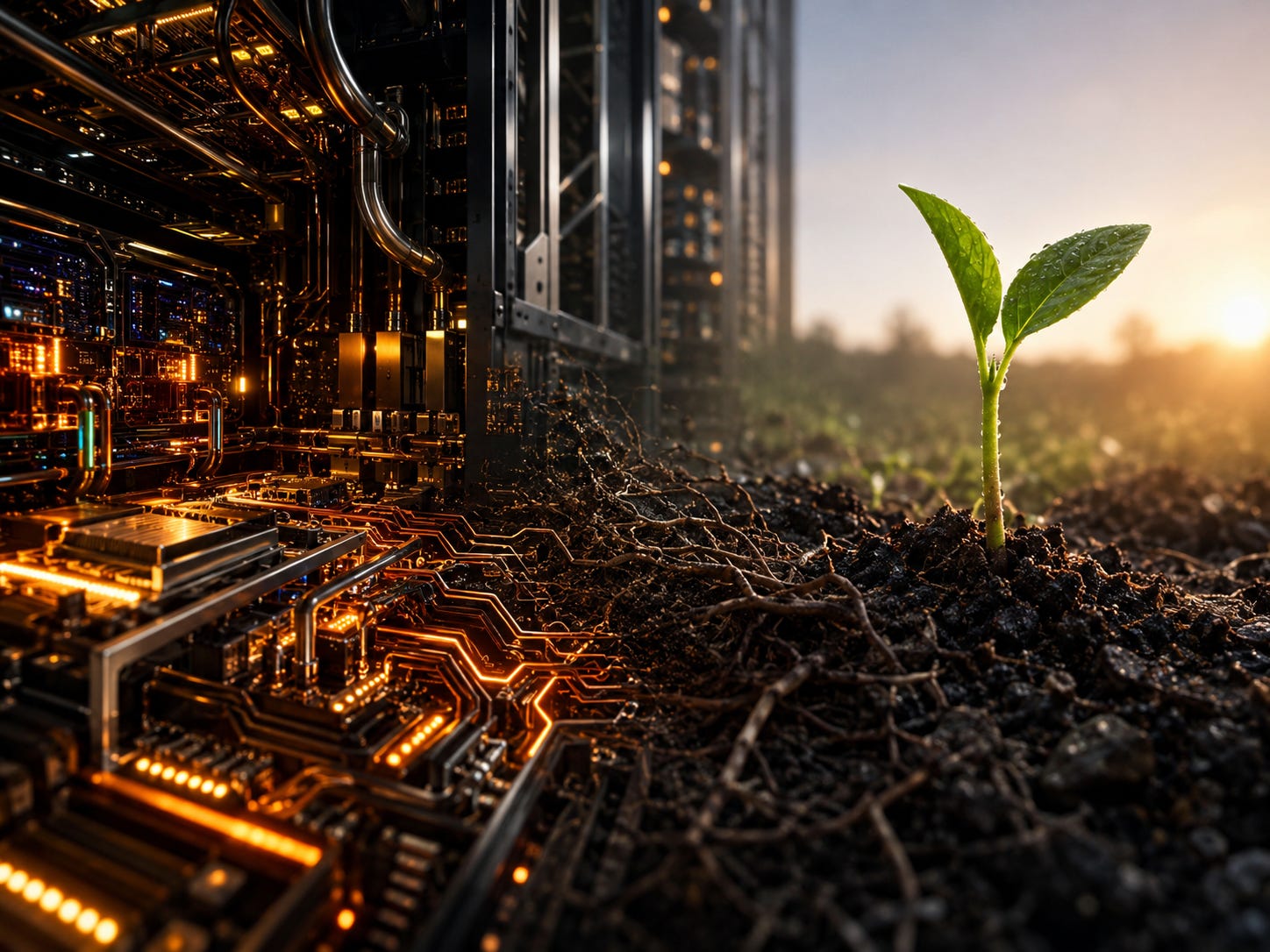
AI has the potential to protect vulnerable communities, but only if we build the physical foundations to keep it open and accessible to the people working in the dirt.